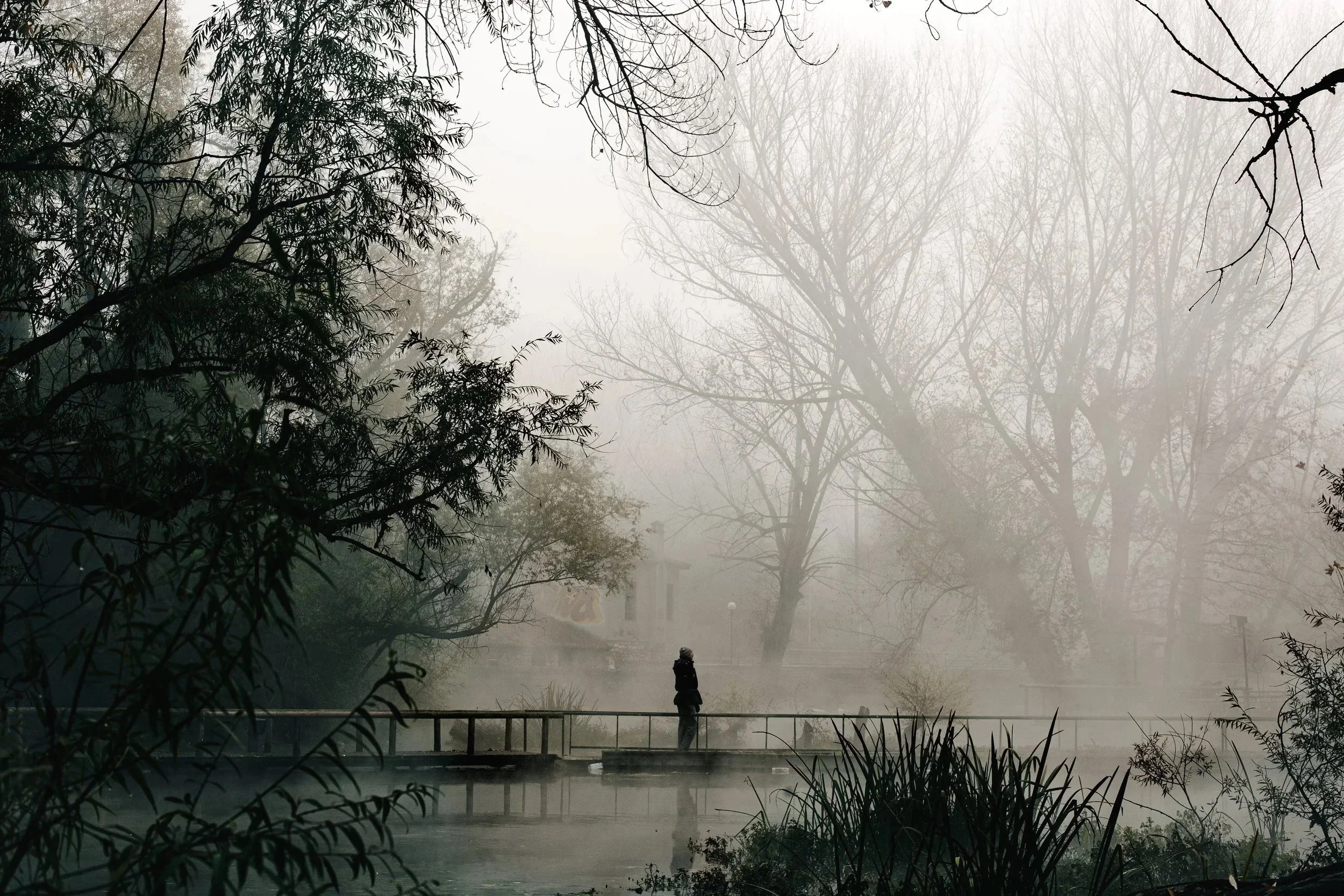
Spring 1993, Athens.
I begin my professional life as a photographer.
Armed with a single analogue camera and two lenses, I had just completed Platon Rivellis’ seminars at the Photographic Circle in Athens. Rivellis devoted only minimal time to the technical aspects of photography. Instead, he read literary passages to us while presenting the pioneers of photographic art. That was his way of teaching, of inspiring.
I remember the Wednesday evening classes, those three hours immersed in images by Julia Margaret Cameron, August Sander, Diane Arbus and others, while he read aloud from Marcel Proust’s In Search of Lost Time. Photography, memory, time: woven together. And from the adjoining room, faintly, the fugues of Bach. There could have been no more beautiful a beginning. By the end of each class, Tsakalof Street in Kolonaki felt like a small, mysterious universe waiting to be discovered and photographed. It was there, in those first steps, that I realised photography could be my way into the world of art.
Over the next two years, along with my camera, I acquired a small motorbike and found myself navigating the streets of Athens. The struggle for survival began: magazines, record labels, theatre, dance. I photographed tirelessly and collaborated with directors, actors, set designers, production teams. I learnt constantly. I wondered whether life would always be like this. That notion of ‘forever’ has accompanied me since then. Only now, at fifty-four, ‘forever’ takes on another tone. Time grows thinner. Loved ones depart. Only now do I understand what a luxury ‘forever’ once was.
Athens became my second great school. The first was my family - the wonderful years in my hometown, Drama. But in Athens I took my first significant steps as an adult. Successes and failures, joys and disappointments, all the experiences that now form pieces of who I am. And yet something inside me was missing. I wanted to spread my wings further, to discover other paths within myself. My dear friend, the photographer Stratos Kalafatis, told me about the International Center of Photography in New York. It was 1994. I mailed my portfolio and waited. During the two months that followed I had to complete my degree at Panteion University. I didn’t want to leave Greece with unfinished projects. The answer from America was positive. I passed all my exams and asked the Rector to bring forward my graduation. And so it happened. I graduated alone, quietly, with only the Rector’s secretary as witness. The next day I flew to New York City.
Autumn 1995, New York.
The universe is infinite, and we are but dots. That is how I felt in New York. I immersed myself into its multicultural atmosphere and savoured it. I missed Greece and my people; yet I carried them within me and moved forward. At the school I enrolled in as many classes as possible - weekdays and weekends alike. I learnt nineteenth-century printing techniques, worked outdoors with gloves and chemicals, exposing images in the sun. Then I spent long hours in the darkroom with my classmates. Under the red safety light I was fascinated by the work of a German classmate, and by that of a woman - the oldest in our group. She was sixty-seven. She had waited her entire life to retire so she could finally pursue her dream. How extraordinary, to understand that the conventional model of life (studies at eighteen, steady job, family, children, retirement, end) can be overturned. That life can begin at sixty-seven, if one wishes.
I walked through streets and across avenues feeling almost weightless.
Our assignment was a self-portrait. It was midnight; the city was alive, and I felt alive with it. An image appeared inside me: my wings, open. I took my camera and tripod and walked towards the United Nations building. The gate was locked, so I climbed the fence. I found myself in the garden. I set up the camera, gathered fallen plane leaves in my hands, and click. Within seconds the security guards arrived and questioned me; how I had got in, why I had climbed over, and they shook my camera. I begged them not to damage the film. I spoke English with a Greek accent, explaining that I had a school assignment, that I loved the garden. They took pity on me and let me go. I took only one photograph, the one whose story I will never forget.
I returned to Greece for Christmas. The whole family reunited in my hometown. Moments of happiness. It was dusk. My brother Dimitris - always my companion - and I set out on our usual walk behind our home. I carried my film camera. The northern light was with us, as always. I asked him to run along the horizon line and jump. In the photograph he appears as a tiny speck in the distance, a small dot in the universe that resembles a bird. And what many assume is the sea is in fact a field and a stone. It was the light, in that precise moment, that pierced us. Perhaps this is the photograph I love the most. It is the two of us, our birthplace, the moment of our lives - our whole life distilled into a single image.
Back in New York, I developed the film and chose only that frame. I enlarged the negative in the darkroom and printed it in the sun using platinum printing, a technique I love deeply. In New York, exposure took 15–20 minutes; in Greece, the same negative required only two. Platinum printing has always captivated me, not only for its tonal richness, but for the devotion and time each stage requires. It is a ritual: enlarging the negative, preparing the emulsion at just the right temperature, choosing the right brush and paper, remembering to wear a mask (or you may, as I once did, end up in hospital from the fumes). All these small details become part of your life. Whether the result succeeds or fails matters surprisingly little.
The shift to digital photography was inevitable and opened new, different paths. Here, there is no time and no material substance. A different magic appears, the magic of the ethereal. Information flows, and we with it; it is stored somewhere mysterious, belonging to no one. Yet my need for photography - even digital photography - to retain something handmade, persists.
Winter 2011, Drama. Dampness.
The garden of our home transformed into a chemistry laboratory. Metal plates -initially tin - on which I spread mixtures of salt, vinegar, ammonia and garden leaves, leaving them overnight to react with the atmosphere. All of this was to prepare the surface on which I would later hand-print my images using the transfer technique. The surface itself became a work of nature.
I discovered the chemical reactions of metals, oxidation, the changes brought by heat, subjects that had never interested me in school Chemistry. These modern tintypes became the basis for my first exhibition in Santorini (2011) and later in Aegina (2012). What began as experimentation led me to an opening night.
The oxidation experiments continued with brass plates. Some mornings the humidity left a pink imprint; at other times, using the same recipe, it produced turquoise.
From 2012 to 2022 I lived outside Greece, in six different countries. There, I worked as a Photo Manager in international organisations, the Olympic Games, cultural events and festivals, and recently, as head of the Official Photography at Expo 2020 and COP28.
I collaborated with photographers and photo editors from around the world, and with major news agencies: Reuters, Agence France-Presse, Associated Press. The work was demanding, not especially creative, yet I learnt so much, mostly through human relationships. I enjoyed belonging to a team tasked with delivering precise results to a high standard in very little time.
It is a strange thing to speak about one’s own photographs. The truth is that I have never felt like a professional photographer, perhaps because photography for me has always been a personal diary. Images live within me first, and then slowly take shape through time. There is always the human presence inside me - that tiny particle - poised within a fragment of space and time.
Lila Sotiriou
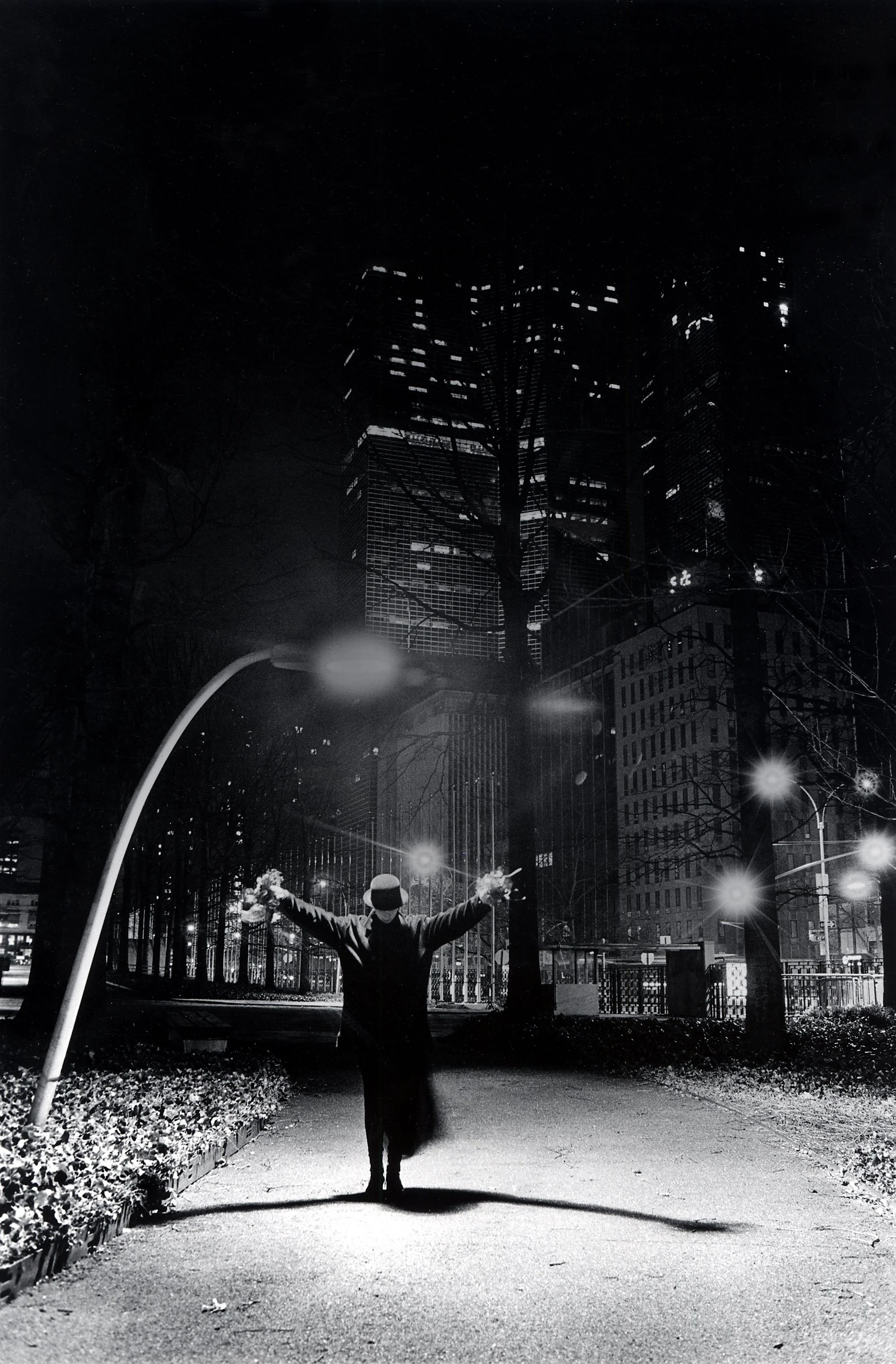
1995, New York. Silver print.
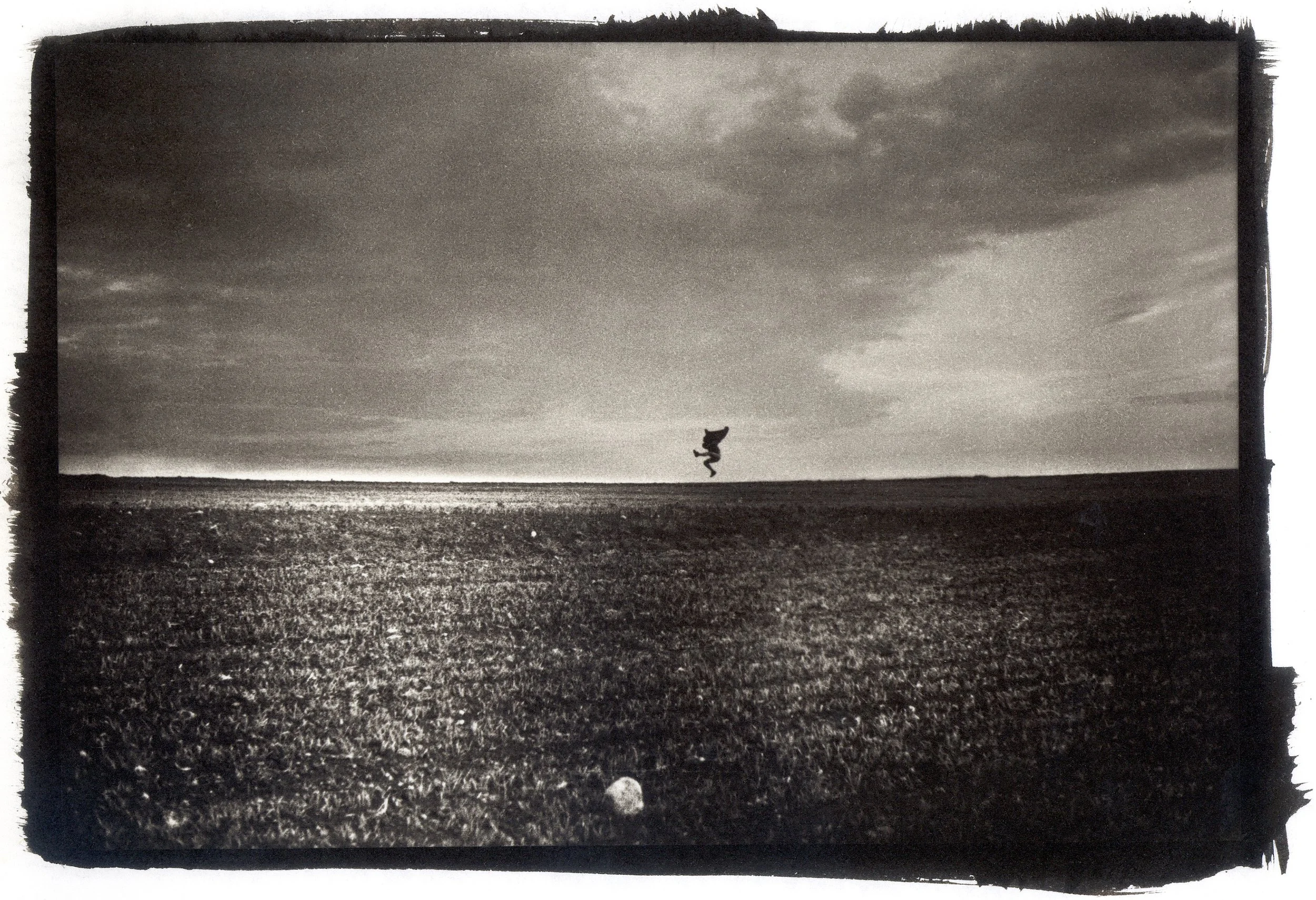
1995, Drama. Platinum Palladium print.
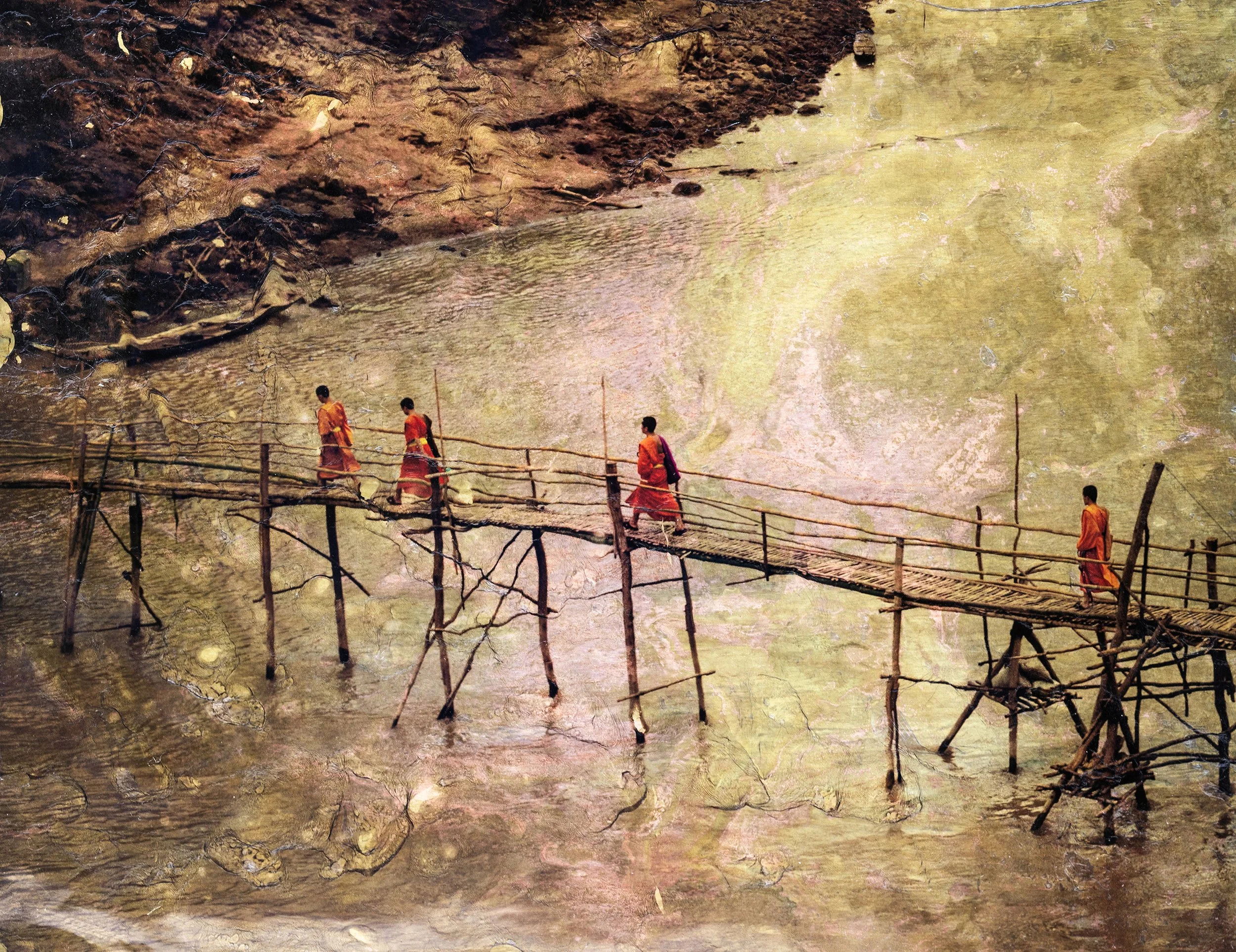
2012, Laos. Brass plate - Image transfer.